Wait until the sky is properly dark enough for faint structure to stand out.
Viewing guide
How to improve your chance of seeing the northern lights
A good aurora forecast is only part of the job. Darkness, cloud, light pollution, horizon direction and timing determine whether an event becomes something you can actually see.
DarknessCloudLight pollutionHorizon direction
Five things that can make or break a northern lights view
Strong aurora activity cannot be seen through an opaque cloud layer.
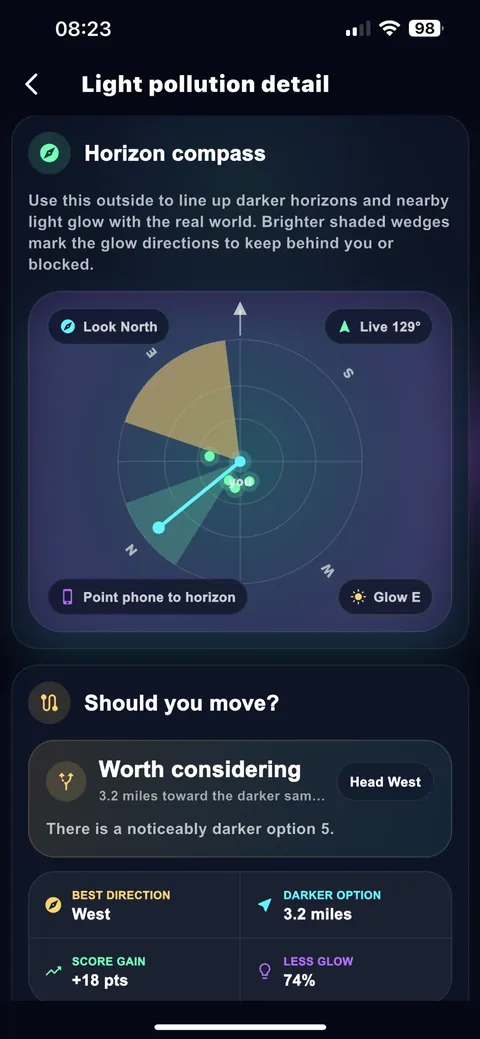
Artificial sky glow can wash out a weak display, especially near the horizon.
A darker, more open horizon may matter more than simply travelling farther.
Conditions can strengthen and weaken quickly, so the best window matters.
The upstream signal still needs to support aurora activity in the first place.
Choose a viewing place for tonight, not forever
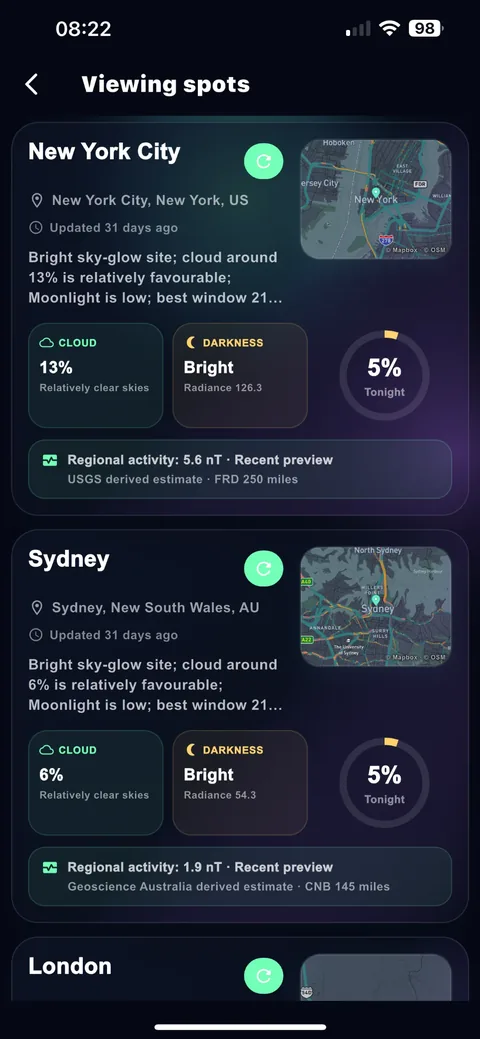
A place that is excellent on one night may be clouded out on another. Viewing Spots combine local cloud, darkness, sky-glow context and regional magnetic evidence where available, helping you compare candidate locations for the night you are actually planning.
Use light pollution as a direction, not only a score
A bright town to the south may matter less if your useful aurora horizon is north and dark. The light-pollution map and Horizon Compass are designed to make nearby glow directional and practical.
Observing safety still comes first
Do not let an aurora forecast override road, coastal, terrain, weather or access safety. Check local conditions independently, avoid stopping in unsafe places and never enter private land without permission.