Magnetic-field orientation near Earth; direction and persistence can matter.
Space weather
Bz, solar wind and Kp for aurora
Understand the measurements behind an aurora forecast without losing sight of the thing that matters most: whether they are producing a useful observing opportunity where you are.
BzSolar windKp & HpRegional ground signals
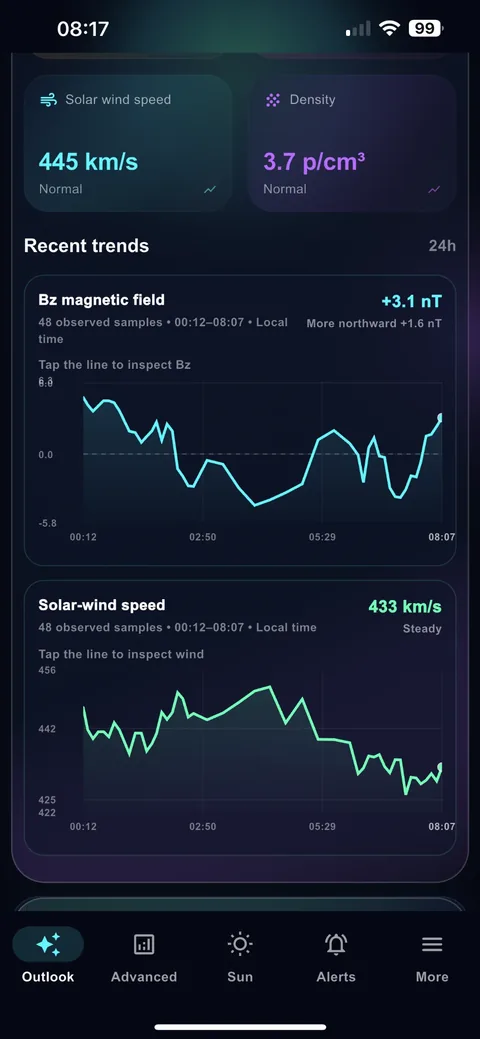
Bz: the magnetic-field direction aurora observers watch closely
The interplanetary magnetic field carried by the solar wind has a north–south component commonly called Bz. Sustained southward Bz can favour stronger coupling between the solar wind and Earth’s magnetic environment, but duration, speed and the wider context all matter.
Solar-wind speed and density
Speed and density describe part of what is arriving near Earth. Sudden changes can add useful context around shocks, stream interfaces and other developments, but no single measurement guarantees visible aurora at your location.
What Kp tells you—and what it cannot
Kp summarises global geomagnetic activity over a three-hour interval. It is valuable context, but it is not the same thing as a local visibility forecast.
Speed, density and related parameters describe the incoming plasma environment.
Geomagnetic indices provide global historical and current activity context.
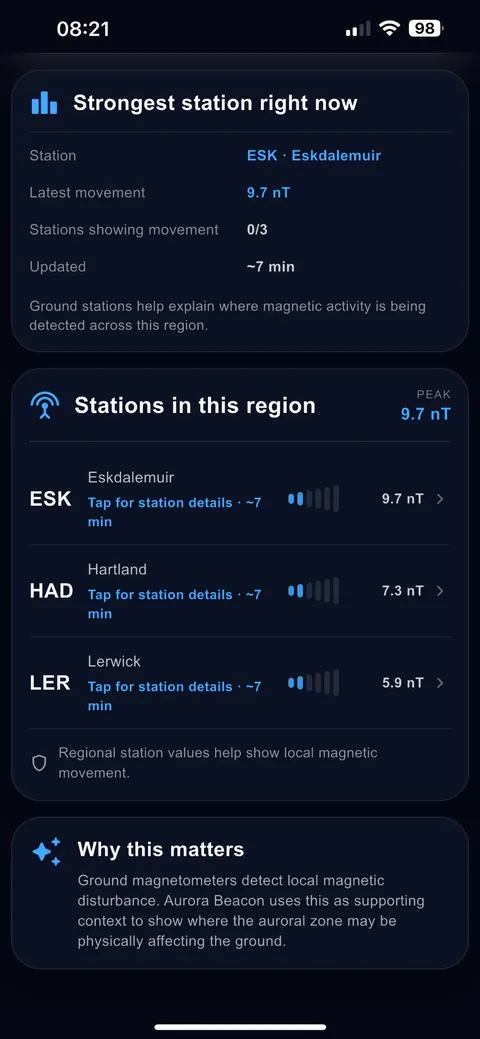
Regional magnetometers can show where disturbance is actually being detected.
From upstream measurements to ground response
The useful story does not stop at the solar wind. Regional magnetometer observations can add evidence of how Earth is responding near an observer. Aurora Beacon keeps those measurements distinct from its own derived interpretation.